Toyota Water Engine Revolution: Is This the Future Beyond Electric Cars?
BY Pooja Mann
May 5, 2025
0
Comments
611 Views
Toyota introduces a revolutionary water engine. Find out how it standsagainst EVs and why it may redefine green mobility over the nextdecade.
Beyond Electric: Toyota’s Ambitious Gamble on Water-Powered Cars
Toyota, the world leader in car innovation, is again disrupting the clean mobility sector. Having revolutionized the market with the Prius, Toyota is now in the news with its research into a water-based engine, a possible game-changer that could rival or even surpass theperformance of current electric vehicles (EVs).
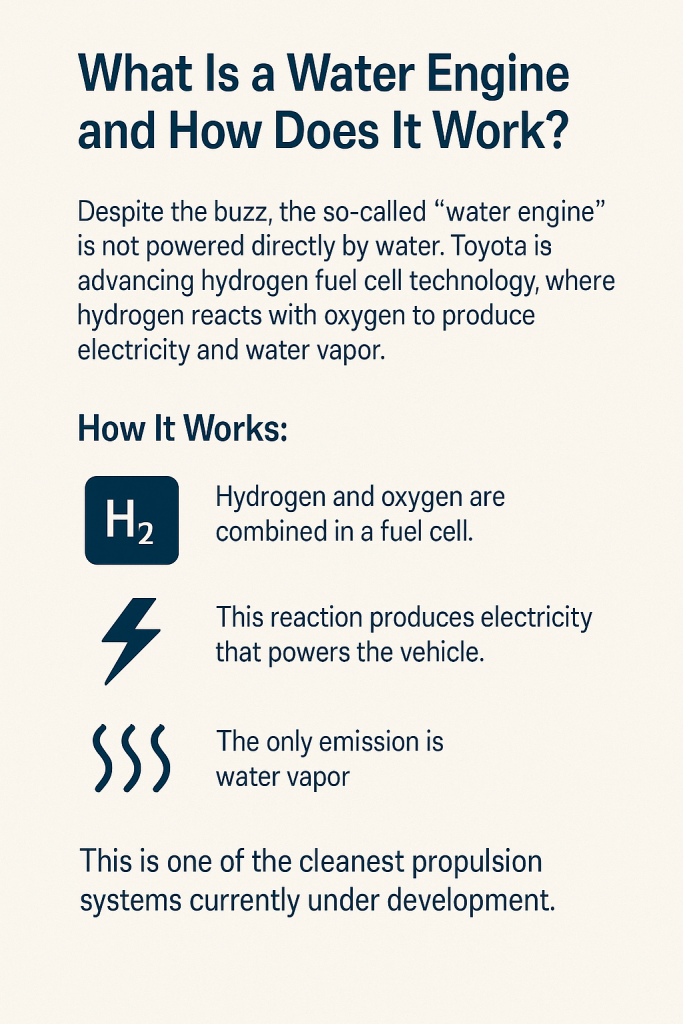
What Is a Water Engine and How Does It Work?
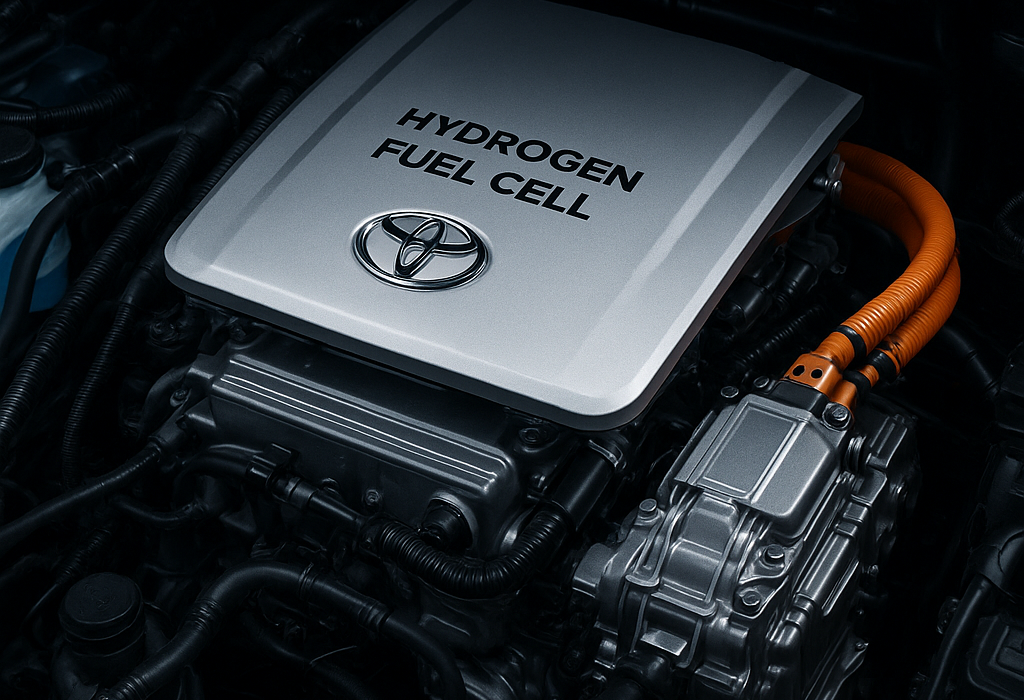
Despite the hype, the so-called “water engine” does not run directly onwater. Toyota is pushing hydrogen fuel cell technology, where hydrogen combines with oxygen to generate electricity and water vapor.
How It Works:
Hydrogen and oxygen are mixed in a fuel cell. The reaction generates electricity that drives the vehicle. The only exhaust is water vapor. This is among the cleanest propulsion systems in development.
#howdoeswaterenginework
Water Engines vs Electric Vehicles: A Clean Tech Showdown
Feature
Hydrogen Fuel Cell (Water Engine)
Battery Electric Vehicles (BEVs)
Refueling Time
3–5 minutes
30–60 minutes (fast charging)
Driving Range
600–800 km
300–500 km (average)
Emissions
Only water vapor
None, but battery disposal concerns
Infrastructure
Emerging and limited
Widely available
Battery Dependency
No lithium-ion battery required
Heavy reliance on lithium, cobalt
Climate Performance
Stable even in cold climates
Degrades in extreme cold
Refueling Stations
Scarce but expanding
Readily available in urban areas
#benefitsoftyotahydroengines
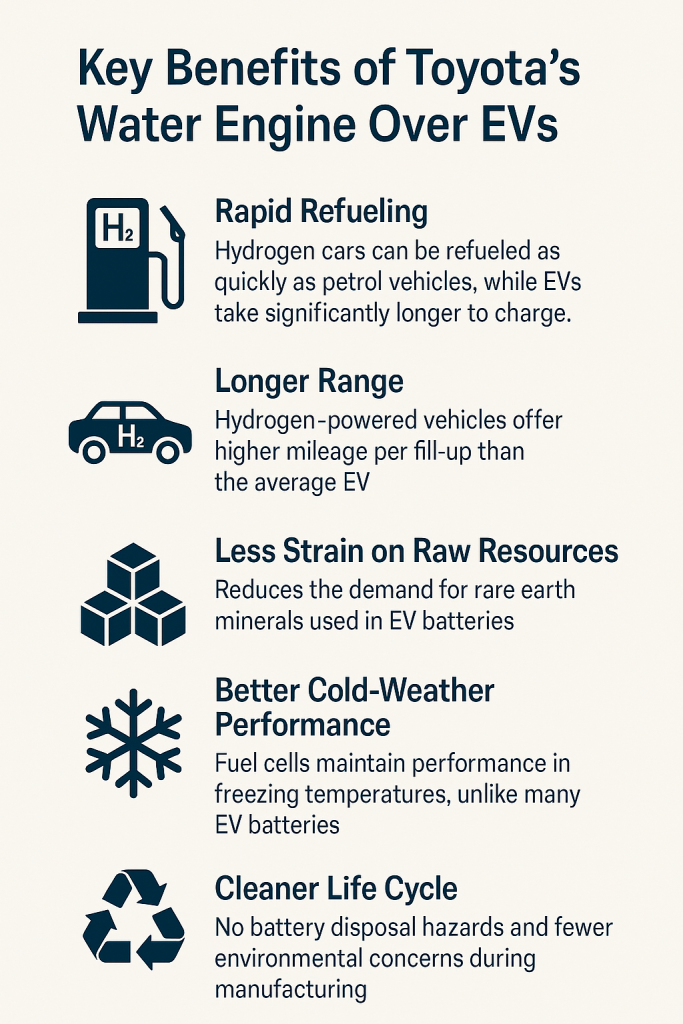
Key Benefits of Toyota’s Water Engine Over EVs
Quick Refueling – Hydrogen vehicles can be refilled as fast as petrol cars, while EVs require much longer to fill up.
Greater Range – Hydrogen fuel cell cars have greater mileage per tankthan the typical EV.
Less Stress on Raw Materials – Lessens the need for rare earth materials employed in EV batteries.
Improved Cold-Weather Capability – Fuel cells do not suffer from cold temperatures like most EV batteries.
Cleaner Life Cycle – No battery waste and less environmental impactduring production.
The Road Ahead
Toyota’s forays into hydrogen fuel cell technology are a major step toward sustainable mobility. As the electric vehicle wave continues tomake waves, water engines may just be the level-up solution: quickrefuelling, more range, and less environmental impact.
But, for mass appeal, it all comes down to investment in hydrogen infrastructure, political support, and consumer education. If these pieces fall into place, Toyota’s technology could indeed be the future of green roads tomorrow.
I’m Pooja Mann, a blogger, digital marketing strategist, and the founder of 89371.LIFE — a space where I write about personal growth, emotional wellness, mindful living, and navigating modern life with purpose.With a background in Physics (Hons) and an MBA in Marketing, I’ve always believed in blending logic with creativity. I come from the manufacturing industry and proudly balance life as a single mother. My experiences have shaped the calm, confident tone I bring to every piece of content I create.I started 89371.LIFE to share the lessons, tools, and stories that have helped me evolve — and I hope they help you too. If you're someone who's always growing, reflecting, and ready to level up, you’re in the right place.You can find more of my work at 89371.LIFE or reach out at puja.mann@icloud.com.